


Why do birds migrate?
Posted on October 16, 2026 at 1:08 PM by Sydney Parker
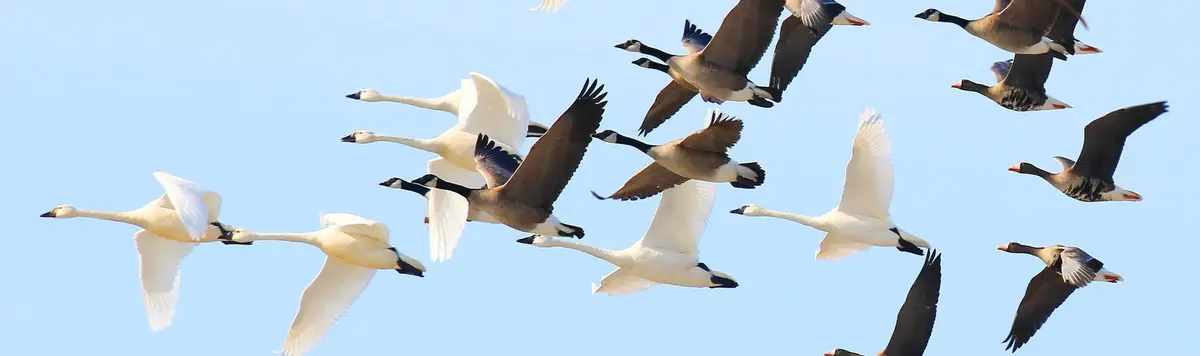
Tundra and Trumpeter Swans, Canada Geese and Great White-fronted Geese fly together during migration. Photo by Larry Reis
Unlike most holidays, World Migratory Bird Day is celebrated twice a year, once during the second Saturday in May, and again during the second Saturday in October. The dates coincide with peak spring and fall migration. As colder weather arrives, many species of birds leave their summer homes. Look up and you’ll see flocks flying south for the winter… but why do birds migrate?
Migration is a costly energy expenditure filled with many perils along the way, but it has its benefits for those who survive the journey: ample food sources, ideal breeding sites and less competition. Birds do not migrate to escape the colder weather itself, but rather to escape other conditions associated with winter. They’ll only travel as far as they have to.
Millions of migratory birds call Iowa home, either as their breeding range during warmer months or as their wintering grounds during colder months. As winter approaches, you’ll start to see species like Dark-eyed Junco, American Tree Sparrow, Horned Lark or Snowy Owl. Some may stick around if the weather stays mild and food remains available, like the American Robin or Eastern Bluebird. And others don’t migrate at all, like the Northern Cardinal or American Crow.
Some larger migrators, like Canada Geese, can be seen high overhead traveling in a “V” due to aerodynamics. Right behind the flying goose, there is a downwash, or a tunnel of air going down. At the end of the wingtips, there is an upwash, or a tunnel of air pushing upwards. The goose behind the leader uses that upwash to fly more efficiently, and so can the goose flying behind it. The birds will cycle who leads so they can travel for longer without one bird getting too tired. Other larger birds, like ducks, pelicans and cranes also fly in the “V” formation. Smaller birds do not use this formation because their size makes it less efficient as it is for larger birds.
While birds are migrating, there are a couple simple ways humans can help them on their long trek:
- Protect birds from window strikes with stickers, decals or other window treatments specifically designed to help birds avoid reflective surfaces.
- You can offer nutrient-dense food, like black-oil sunflower seeds or suet. Be sure to disinfect and change feeders regularly.
- If you have a bird bath, make sure to keep a couple inches of water available to the birds, which helps them hydrate and bathe on their trek and helps you be able to see more bird varieties. You can use a small heater designed for bird baths to provide a year-round water source. Keep this clean, too!
- If you have a cat, keep them indoors to make sure they do not hunt birds.
- Turn unnecessary lights off or dim the lights in your home. Lights at night can confuse birds and disrupt their migration, especially since most birds migrate in the cover of nightfall. For more ways to help migrating birds, check out the Cornell Lab of Ornithology.
Migration is a big, dangerous deal for billions of birds in North America each year, and human intervention through habitat destruction, light pollution and heavy pesticide use makes it even more difficult for these frequent flyers. According to World Migratory Bird Day, the theme this year is “Every Bird Counts - Your Observations Matter.” Look outside and take in the incredible scope of annual migration, with some birds traveling thousands of miles to get to their destination. Maybe you will even spot a new species to you.


