


REAP in Your Region
Posted on November 20, 2026 at 10:16 AM by INHF Author
The Resource Enhancement and Protection (REAP) program is an incredibly significant program that helps to fund various projects across the state of Iowa that improve our natural and cultural resources. It’s responsible for the investment of more than $330 million across all of Iowa’s 99 counties. It’s also a program that heavily relies on public input to inform how funds are allocated and to ensure that funding continues to be available.
Since its creation under Governor Terry Branstad in 1989, locally-led meetings — called REAP Assemblies — are held biennially so the public can learn about expenditures, express ideas and suggest projects. This was one of those years, with 19 “show and tell” style meetings held across the state this summer showcasing REAP-funded initiatives and amenities.
Kaiden Martin, who lives in Story County and is currently serving as INHF’s Mark C. Ackelson Public Policy Fellow, attended his region’s REAP assembly for the first time. Organizations from Story and Boone counties shared how they benefitted from REAP funds across the program’s seven categories, including:
Iowa Young Birders: birding backpacks available on loan at libraries across Iowa, equipping interested youth with educational materials and binoculars
Ericson Public Library, Boone: digitization of historical records to better preserve cultural resources
Story County Conservation Integrated Roadside Vegetation Management Program: expanded capacity for roadside prairie plantings and maintenance through REAP-funded hydroseeders, spraying trucks, prescribed fire equipment, and more
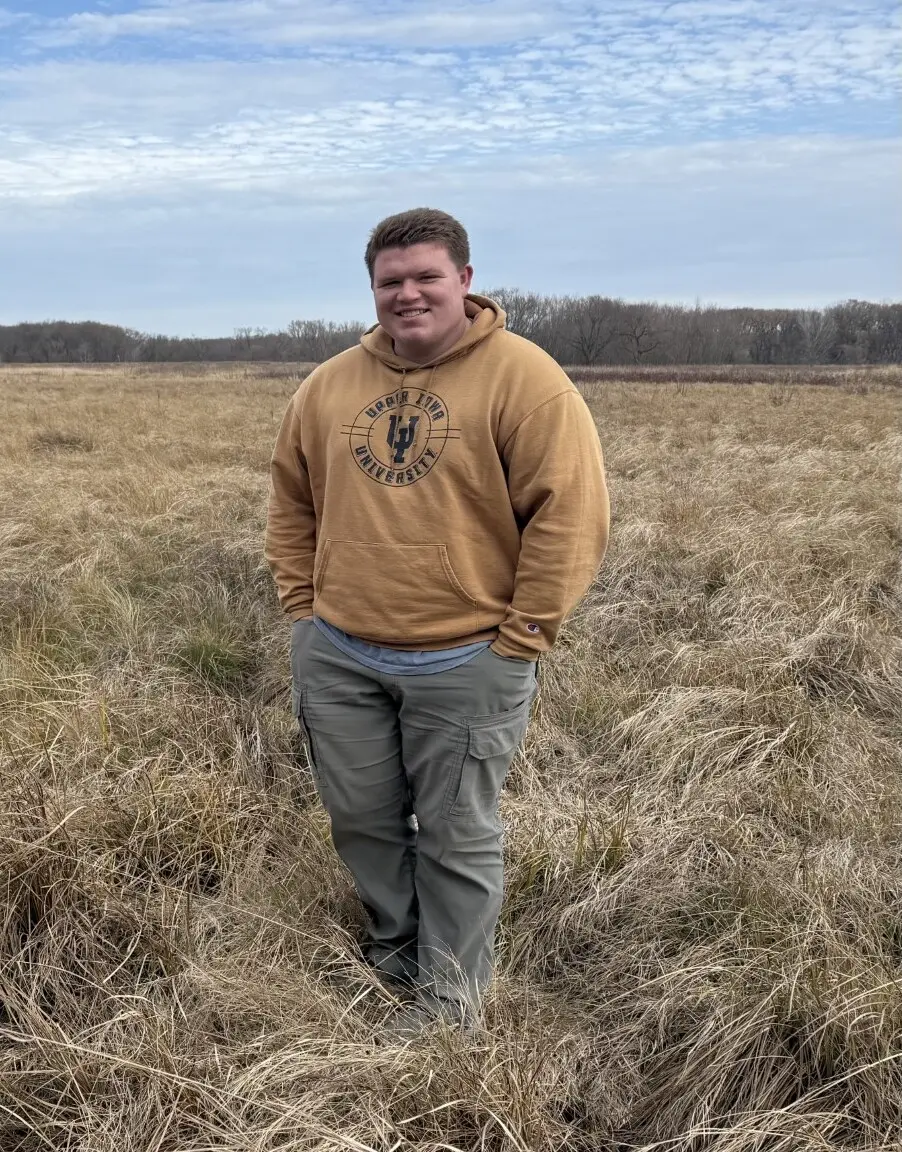 “It was eye-opening to see all the ways REAP has supported my region,” Kaiden says. “I was especially interested to learn that the funding categories provide opportunities for city, county and state government as well as nonprofit organizations. REAP offers so much potential for communities.”
During REAP Assemblies, the public can invoke and vote on motions that provide input on the program. They also nominate five delegates who will carry these motions forward to the REAP Congress that takes place in the State Capitol later that same year. Motions will culminate as recommendations to the legislature, Governor, and REAP administrating agencies.
Kaiden was chosen as one of the delegates for his region, so in late August he attended the REAP Congress to represent the ideas expressed at the Assembly.
“I really enjoyed that experience and hope to participate again next time,” Kaiden reflects. “Motions brought forth by delegates from other Assemblies led to interesting discussion, and the day gave me an opportunity to talk to people from all across Iowa who are interested in improving the state’s natural and cultural resources. I left feeling good about finding a venue to voice my opinions and concerns.”
The next round of REAP Assemblies will be held in 2028, the same year REAP funding, which comes from Iowa gaming receipts and natural resource license plate sales, is currently set to expire. Though the content and timing of this year’s REAP Assemblies garnered renewed public interest and the list of REAP’s community impacts is lengthy, funds are routinely diverted to other parts of the state’s budget and the program has never been fully funded at its authorized cap of $20 million per year.
“Now is the time to speak up if you value Iowa’s natural and cultural resources,” Kaiden urges. “Whether it’s soil and water enhancements, open space, historical resource development or another funding category that’s important to you, all of these projects improve our quality of life, enhance local economies and preserve Iowa’s natural and cultural heritage.”
Motions most often made at REAP Assemblies:
- Fully fund REAP at $20 million
- Extend or eliminate the REAP sunset clause (2028)
- Increase statutory cap of $20 million per year to account for inflation since 1989
- Fund the Natural Resources & Outdoor Recreation Trust Fund to enhance REAP funding


